

Cart
0


*Images are for reference only
Sansevieria Trifasciata Laurentii Snake Plant
×



Share this product
We deliver within 7–10 working days.
Vendor: Jiffy Plants
Couldn't load pickup availability
100% Live & Healthy Plant
Secure payment
Healthy Roots Guarantee 🌱
Guarantee safe checkout


Sansevieria Trifasciata Laurentii Snake Plant
Rs. 349.00

Selling Size : Single Plant | Pot Included | Secure Packing
The Sansevieria Trifasciata Laurentii Snake Plant or variegated snake plant is a popular and low-maintenance houseplant, perfect for beginners.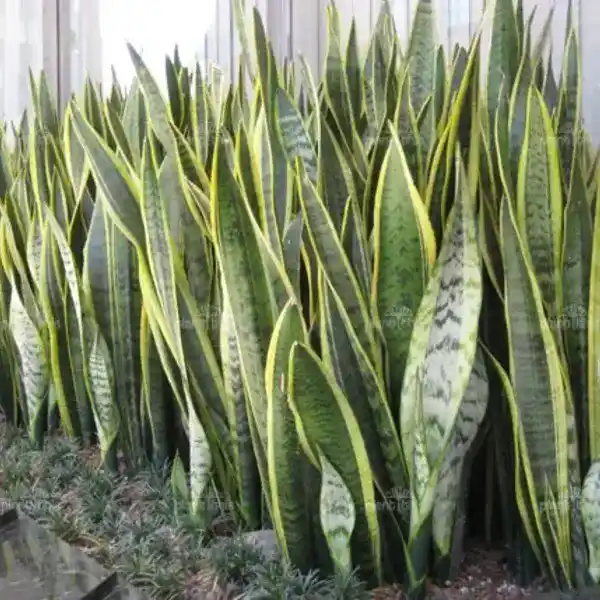 Sansevieria Trifasciata Laurentii Snake Plant
 Here's a guide care for Sansevieria Trifasciata Laurentii Snake Plant :
1. Watering:- The most common mistake is overwatering. Snake plants are succulents and store water in their leaves.
- Allow the soil to dry out completely between waterings.
- Water less frequently in the fall and winter when the plant's growth slows.
- Check the soil by sticking your finger about two inches down. If it feels moist, wait to water.
- When you do water, water thoroughly until the water drains out of the pot's drainage holes.
- Snake plants are incredibly adaptable and can tolerate a wide range of light conditions, from low light to bright, indirect sunlight.
- For the best growth and to maintain the vibrant yellow variegation on the leaves, place your plant in a spot with bright, indirect light.
- Avoid prolonged, direct sunlight, as it can scorch the leaves.
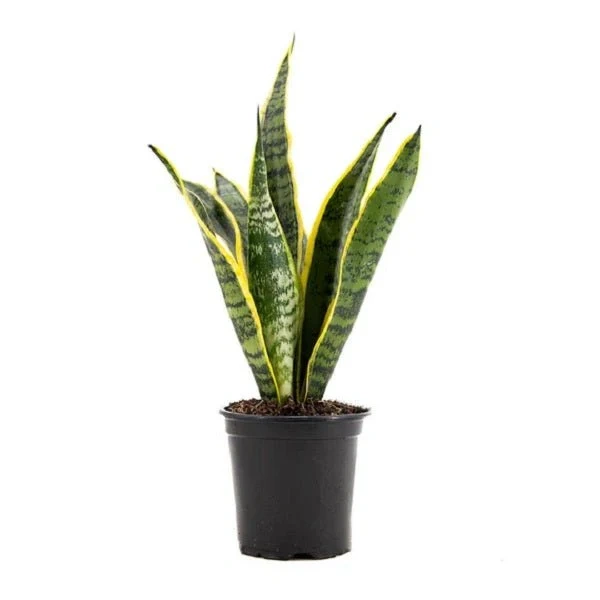 Sansevieria Trifasciata Laurentii Snake Plant 3. Soil & Potting:
 - Use a well-draining potting mix. A mix designed for cacti and succulents is ideal.
- Ensure the pot has a drainage hole to prevent water from pooling at the bottom and causing root rot.
- Snake plants prefer to be a bit root-bound, so you don't need to repot often—typically every 2-3 years. Repot in the spring.
- These plants thrive in warm temperatures, ideally between 60°F and 80°F (15°C – 27°C).
- They are not tolerant of cold temperatures. Keep them away from cold drafts and temperatures below 50°F (10°C).
- Average household humidity is perfectly fine. They do not require misting.
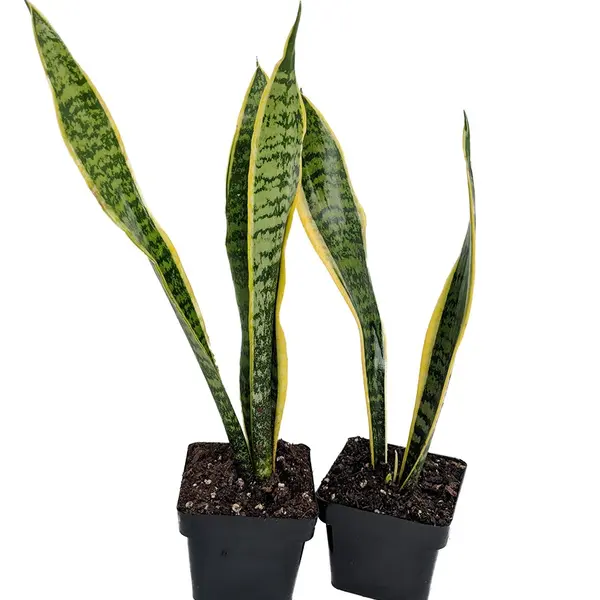 Sansevieria Trifasciata Laurentii Snake Plant 5. Fertilizing:
 - Sansevieria are not heavy feeders.
- You can feed them with a general-purpose houseplant fertilizer diluted to half strength once a month during the spring and summer growing season.
- Do not fertilize in the fall and winter.
- You can wipe the leaves occasionally with a damp cloth to remove dust and help the plant photosynthesize.
- Prune off any damaged, yellowing, or brown leaves at the base using a clean, sharp tool.
- You can also propagate new plants from leaf cuttings or by dividing the plant.