

Cart
0


*Images are for reference only
×



Share this product
We deliver within 7–10 working days.
Vendor: Jiffy Plants
Couldn't load pickup availability
100% Live & Healthy Plant
Secure payment
Healthy Roots Guarantee 🌱
Guarantee safe checkout


String of Dolphins
Rs. 99.00

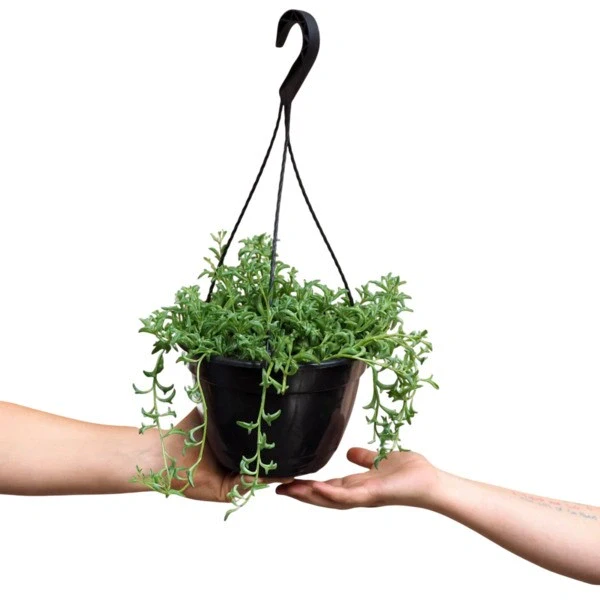
Size: Well-rooted plant in a Jiffy Bag The "String of Dolphins" plant, scientifically known as Curio × peregrinus (formerly Senecio peregrinus), is a unique succulent with cascading stems and leaves resembling leaping dolphins, native to the Eastern Cape region of South Africa. 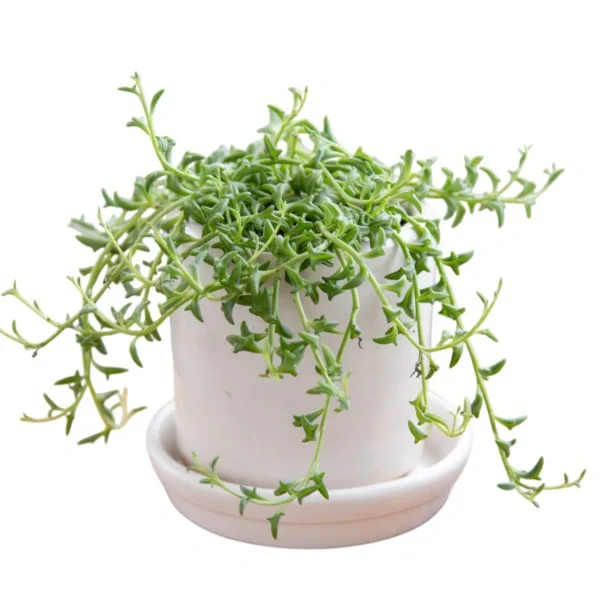 String of Dolphins Appearance & Characteristics:
Here's a more detailed look at this charming plant:
String of Dolphins Appearance & Characteristics: -
Unique Shape:
The plant's most striking feature is its cascading stems adorned with small, curved, bluish-green leaves that resemble leaping dolphins. - Size: It can grow up to 3 feet long and 6 inches tall, making it ideal for hanging baskets or spilling over shelves.
- Flowers: It produces small, white, cinnamon-scented flowers during the spring and summer.
- Other names: It is also known as flying dolphins, dolphin plant, or dolphin necklace
- Light: Prefers bright, indirect light, but can tolerate some low light conditions.
- Watering: Water sparingly, allowing the soil to dry out completely between waterings to prevent root rot.
- Soil: Use well-draining succulent or cactus soil mix.
- Temperature: Thrives in a temperature range typically found in indoor environments, between 65 and 75 degrees Fahrenheit (18 and 24 degrees Celsius).
- Humidity: Prefers slightly more humid conditions, so consider increasing humidity around the plant.
- Fertilizing: Minimal fertilization is needed, light feeding in the early spring can be beneficial.
- Pruning: Remove dead or dying parts back to the base to encourage new growth.
- Propagation: Easily propagated from cuttings.
- Pets: String of Dolphins can be mildly toxic to pets, so it's best to keep it out of reach of animals.
- Humans: It can also be mildly toxic to humans, so avoid ingestion.