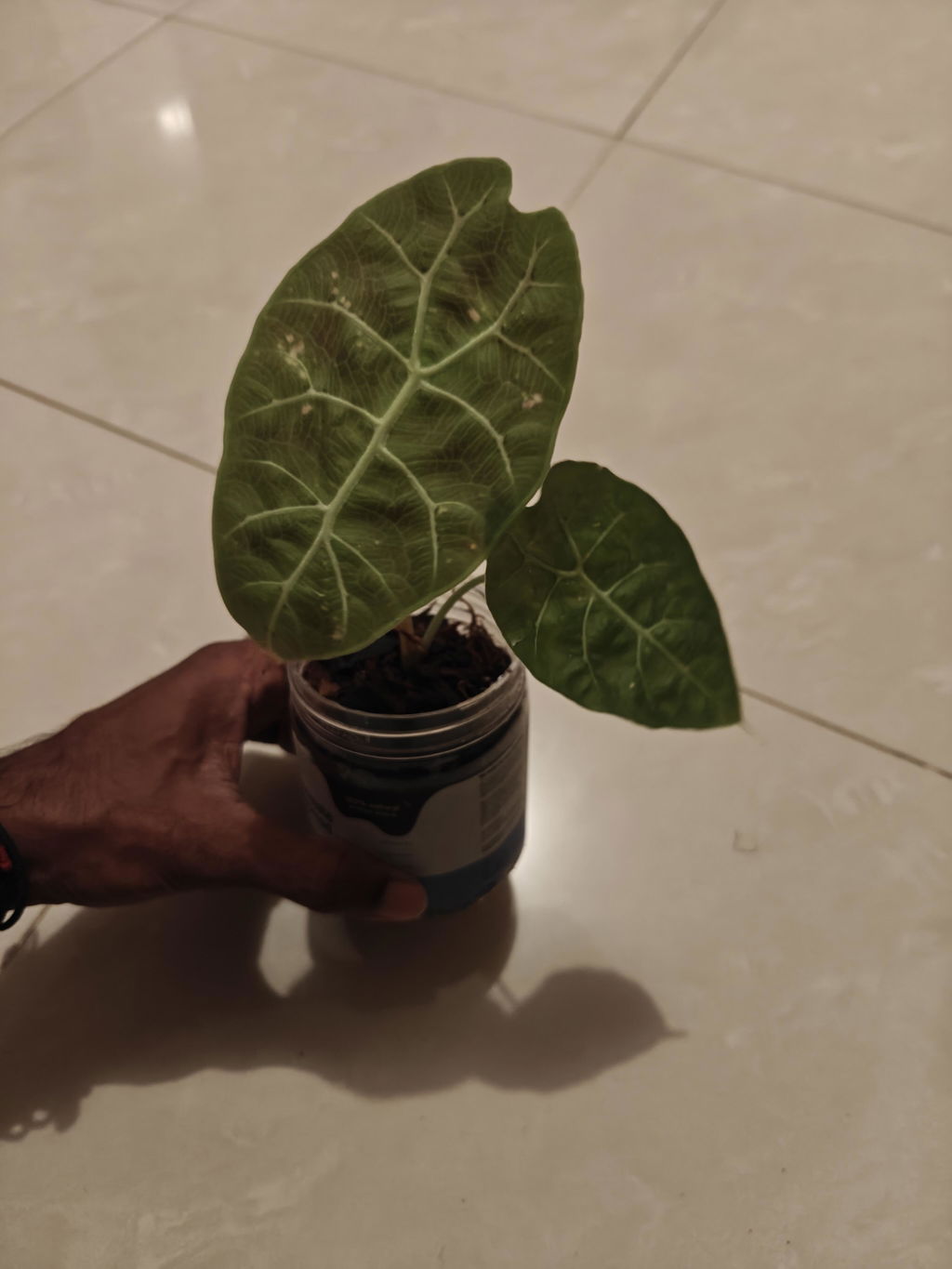
Caladiums, often known as 'Angel Wings' or 'Heart of Jesus', are renowned for their spectacular, vibrant foliage that brings an instant splash of tropical color to any indoor space. Native to the rainforests of South America, these stunning plants captivate with their intricate patterns and a vast array of leaf shapes and hues, from brilliant reds and pinks to deep greens and whites. Perfect for adding a dramatic visual statement, each Caladium leaf is a living work of art.
🌟 Overview
The 'Caladium daranopparat' is a highly sought-after cultivar celebrated for its exceptionally striking and colorful leaves. This variety offers a unique display of intricate patterns, making it a prized addition for collectors and enthusiasts looking to elevate their indoor plant collection with truly rare and captivating foliage from tissue culture propagation.
☀️ Light Requirements
- Prefers bright indirect light for optimal color and growth.
- Avoid direct sunlight, which can scorch the delicate leaves and fade their vibrant hues.
- Partial shade is also well-tolerated, especially in warmer climates.
💧 Water Requirements
- Keep the soil consistently moist but never waterlogged.
- Water thoroughly when the top 2 inches of soil feel dry to the touch.
- Reduce watering significantly during its dormancy period, typically in autumn and winter, allowing the plant to rest.
📏 Size & Growth
Typically grows to a height of 15-30 cm indoors, though size can vary based on growing conditions and the plant's stage of development. Caladiums emerge from tubers and produce a lush canopy of foliage during their active growing season.
🌍 Origin & Characteristics
Caladiums are native to the tropical and subtropical rainforests of South America, thriving in warm, humid environments. They are herbaceous perennials known for their dramatic, heart-shaped or lance-shaped leaves, which come in a kaleidoscope of colors, patterns, and textures, creating a stunning visual impact.
📇 Toxicity & Safety Warning
Caladiums contain calcium oxalate crystals, making them toxic if ingested by humans or pets. It is advisable to keep this plant out of reach of children and curious animals to prevent any accidental consumption.
❓ Frequently Asked Questions
Q: How do I care for my Caladium during dormancy?
A: When leaves start to yellow and die back (usually in autumn/winter), reduce watering. Once fully dormant, store the pot in a cool, dry place and resume watering in spring as new growth emerges from the tuber.
Q: Why are my Caladium leaves turning yellow?
A: Yellowing leaves can indicate several issues, including overwatering, underwatering, or too much direct sunlight. Check soil moisture levels and adjust your watering schedule, and ensure the plant is receiving appropriate indirect light.
Q: Can Caladiums be grown outdoors?
A: Yes, in tropical or sub-tropical climates (USDA Zones 9-11), Caladiums can thrive outdoors in shady or partial shade locations during the warmer months. In cooler regions, they are best kept as indoor plants or brought indoors before temperatures drop.