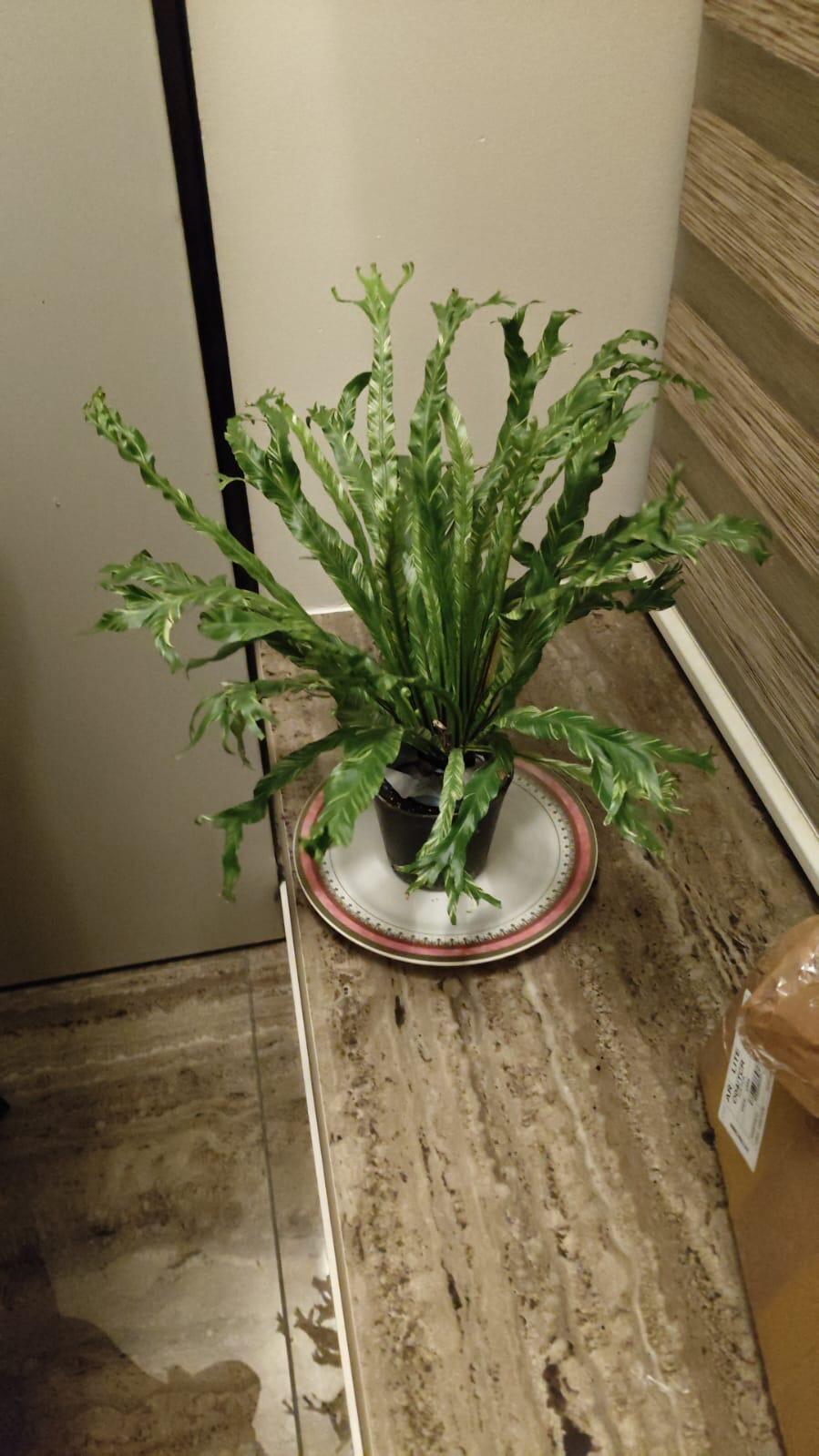
Calatheas are celebrated for their spectacularly patterned foliage, originating from the humid understories of the Amazon rainforest in tropical South America. Known as "Prayer Plants," they exhibit a fascinating nyctinastic movement, folding their leaves upwards at night as if in prayer and unfurling them with the morning light. These striking plants bring an unparalleled touch of exotic beauty and dynamic living art to any indoor space.
🌟 Overview
The Calathea Marion is a particularly captivating variety, showcasing bold, contrasting stripes of deep green and lighter, often silvery-green hues across its elegant, broad leaves. The undersides often reveal a rich purple, adding another layer of visual drama. Each leaf is a natural masterpiece, making it a focal point in any plant collection.
☀️ Light Requirements
- Thrives in bright, indirect light.
- Avoid direct sunlight, which can scorch its delicate leaves and fade its vibrant patterns.
- Rotate the plant occasionally to ensure even growth and light exposure.
💧 Water Requirements
- Keep the soil consistently moist but never soggy.
- Water when the top inch of soil feels slightly dry to the touch.
- Use filtered or distilled water if possible, as Calatheas are sensitive to chemicals in tap water.
- Ensure good drainage to prevent root rot.
📏 Size & Growth
- Typically grows to about 1-2 feet (30-60 cm) in height and spread indoors.
- Exhibits a moderate growth rate, forming a lush, bushy clump.
- Ideal for tabletops, shelves, or as a vibrant floor accent.
🌍 Origin & Characteristics
- Native to the tropical rainforests of Brazil and other parts of South America.
- Belongs to the Marantaceae family, renowned for its decorative foliage and 'prayer' movement.
- Its dramatic leaf patterns and color variations are a natural adaptation to lower light levels in its native habitat.
📇 Toxicity & Safety Warning
- The Calathea Marion is considered non-toxic to pets and humans, making it a safe choice for homes with animals and children.
- Always supervise pets and children around houseplants to prevent accidental ingestion.
Q: Why do my Calathea Marion's leaves move?
A: This fascinating movement, known as nyctinasty, is characteristic of Calatheas. They raise their leaves at night and lower them during the day in response to light cycles, mimicking their natural environment to optimize light absorption and conserve moisture.
Q: What causes crispy leaf edges on my Calathea?
A: Crispy leaf edges are usually a sign of low humidity, underwatering, or sensitivity to tap water chemicals. Increase humidity with a humidifier or pebble tray, ensure consistent watering, and consider using filtered water.
Q: How often should I fertilize my Calathea Marion?
A: Fertilize every 2-4 weeks during the growing season (spring and summer) with a balanced, diluted liquid fertilizer. Reduce or stop fertilizing during fall and winter when growth slows.