

Cart
0


*Images are for reference only
×



Share this product
4.4
★
★
★
★
☆
Based on 13 reviews
We deliver within 7–10 working days.
Vendor: Jiffy Plants
Couldn't load pickup availability
100% Live & Healthy Plant
Secure payment
Healthy Roots Guarantee 🌱
Guarantee safe checkout


Heliconia Black Cherry
Rs. 599.00

Selling Size : Single Plant | Pot Included | Secure Packing
The 'Heliconia Black Cherry' (often a hybrid of Heliconia bihai and Heliconia caribaea, or sometimes a cultivar of Heliconia psittacorum) is a stunning tropical plant known for its dramatic, dark burgundy to cherry-red bracts. Its care is similar to other large Heliconias, focusing on replicating its native tropical environment.
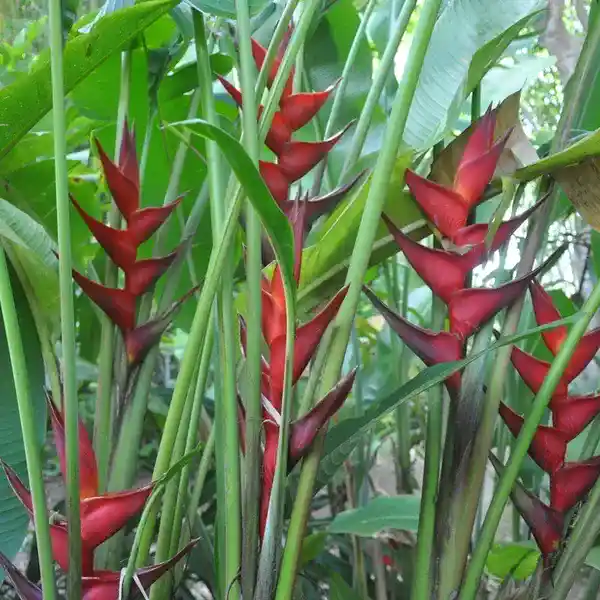 Heliconia Black Cherry
 Here is a guide to caring for your Heliconia Black Cherry:
1. Light Requirements
- Ideal: Full sun to partial shade. For the most prolific blooms and strong growth, aim for a position with morning sun and protection from intense afternoon sun (partial shade/filtered light).
- Protection: Position it in a sheltered spot outdoors, as strong winds can shred the large, banana-like leaves.
2. Temperature and Climate
- Climate: Thrives in tropical and subtropical climates (USDA Zones 10-13, or equivalent warm, frost-free areas).
- Temperature: Prefers warmth and high heat. It is not frost-tolerant, and exposure to cold temperatures below 50∘F (10∘C) can be damaging.
- Cooler Climates: If you live in a temperate zone, grow it in a large container so it can be moved to a sheltered area, greenhouse, or indoors during the winter.
3. Watering and Humidity
-
Watering: Heliconias are thirsty plants. The soil must be consistently moist but never waterlogged or soggy.
- Water deeply and regularly, especially during the warm growing season.
- Ensure the soil has excellent drainage to prevent root rot, which is a common issue from overwatering.
- Humidity: It requires high humidity (ideally 60%+). In dry environments, leaf margins may turn brown.
4. Soil and Planting
- Soil: Use a rich, fertile, well-draining soil with a high content of organic matter (like compost or well-aged manure).
- pH: Prefers a slightly acidic to neutral soil (pH 6.0–7.0).
-
Planting: Plant the rhizomes 4-6 inches (10-15 cm) deep.
- Spacing: Allow 5−6.5 feet (1.5−2 meters) between plants to ensure adequate air circulation and room for clumping.
- Containers: Use a high-quality potting mix with good drainage in a large, heavy pot.
5. Fertilizing
- Schedule: Feed regularly during the active growing season (spring through autumn). Heliconias are heavy feeders.
- Type: Use a balanced, slow-release tropical fertilizer or a liquid fertilizer (e.g., NPK 20-20-20) every 4-6 weeks during summer.
- Tip: Fertilizers rich in phosphorus and potassium are often recommended to support prolific flowering.
6. Pruning and Maintenance
- Spent Stems: Heliconias bloom on a stalk (pseudostem) only once. Once the flower bracts fade, cut the entire stem down to the base to make room for new shoots (which will produce the next flowers).
- Foliage: Remove any yellowing, damaged, or dead leaves to keep the plant tidy and improve air circulation.
- Clump Division: Since it has a clumping habit, you may need to divide the rhizomes every 3-4 years to prevent overcrowding and maintain plant vigor. This is best done in the spring.
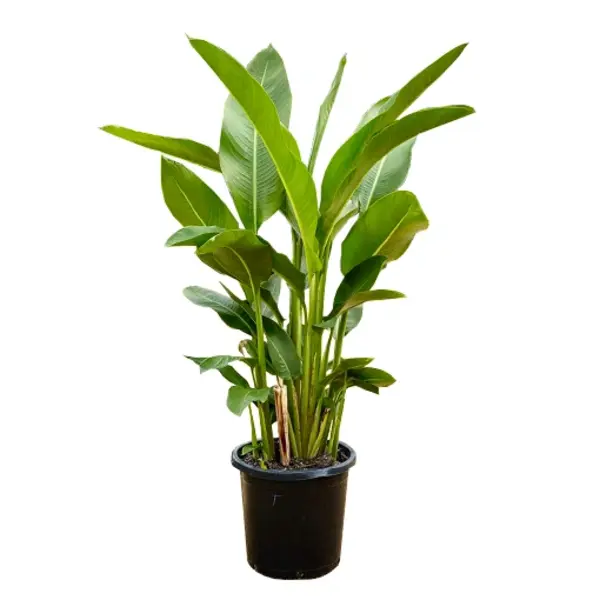 Heliconia Black Cherry
 7. Pests and Problems
- Pests: Generally low-maintenance, but occasionally check for common pests like spider mites, aphids, mealybugs, or scale. Treat with horticultural oil or insecticidal soap as needed.
- Key Warning: Overwatering that leads to soggy soil is the most common cause of root rot, which can kill the plant. Ensure drainage is always optimal.
Customer Reviews for Jiffy Plants
F
Is the venus fly trap really in good condition if anyone has bought it.
A
Plant were all had pest holes
R
Plants were healthy and packing was quite good!! Happy with my plants
S
I received all the plants that I ordered in excellent condition. The packaging was perfect and the plants arrived as if I brought them from a nursery personally.
P
Excellent
S
All the plants i recieved were in a very good condition and a recieved them wothin 2 days and the price was also good
C
Received the plants in very good condition, thank you so much.
N
Excellent service and products.
T
This plant came in good condition
S
Had ordered ten plants in coco peat seeding capsules. It was delivered well packed and all the plants were healthy. Foliage.in platform friends were quick and very helpful with my queries. Appreciate the quality of plants and HR
J
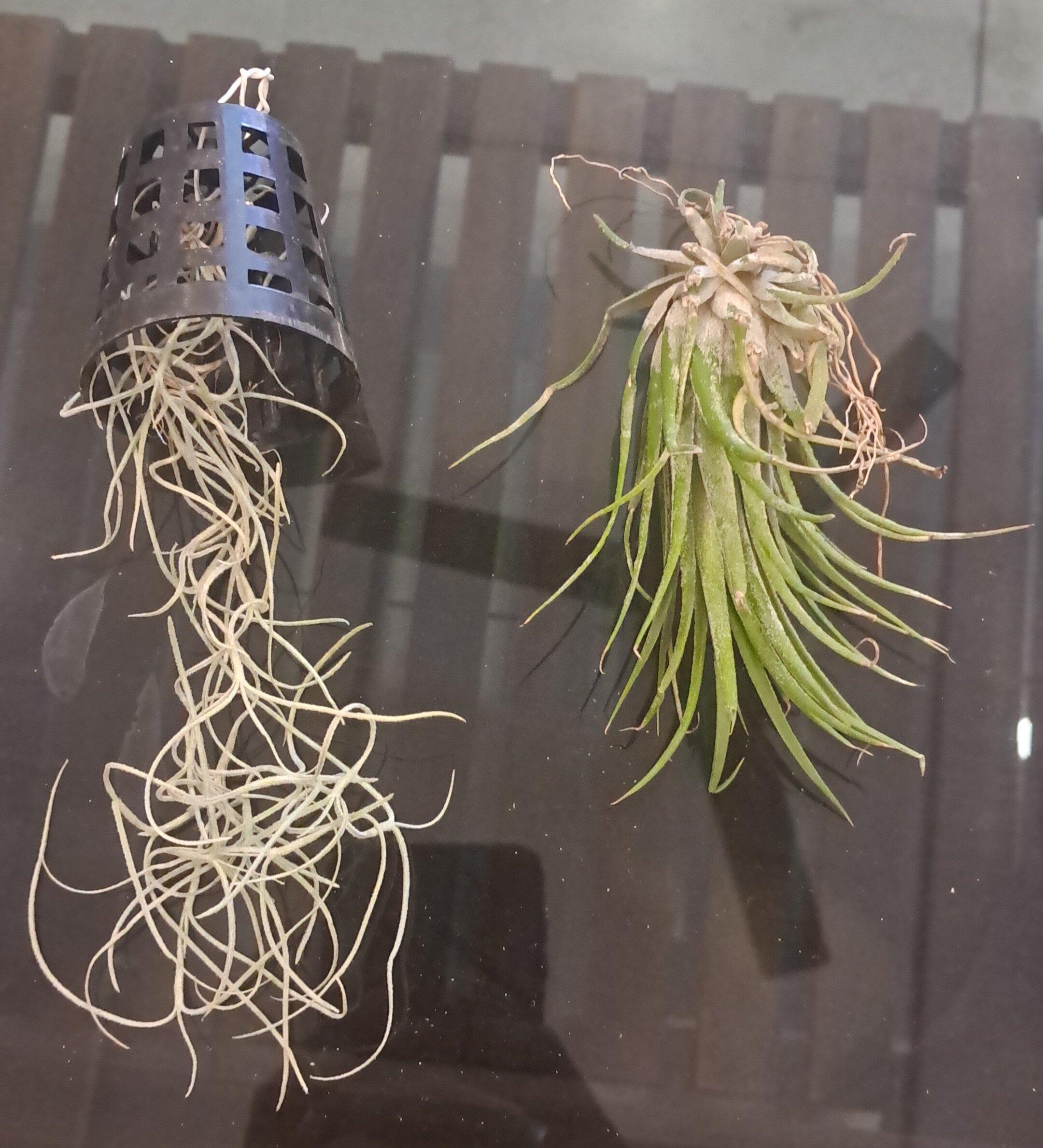
I bought Spanish moss and Tillandsia from Jiffy Plants and both came in good condition with good packing.
R
Plants are very healthy. Good packing too.
T
Excellent service and good product. Plant arrived healthy, well-packaged, and already budding. Very happy with my purchase