

Cart
0


*Images are for reference only
×



Share this product
4.4
★
★
★
★
☆
Based on 13 reviews
We deliver within 7–10 working days.
Vendor: Jiffy Plants
Couldn't load pickup availability
100% Live & Healthy Plant
Secure payment
Healthy Roots Guarantee 🌱
Guarantee safe checkout


Japan Green Maple (Acer Palmatum)- Rare
Rs. 974.00

Single plant | Free Shipping | Pot included
THE BASICS
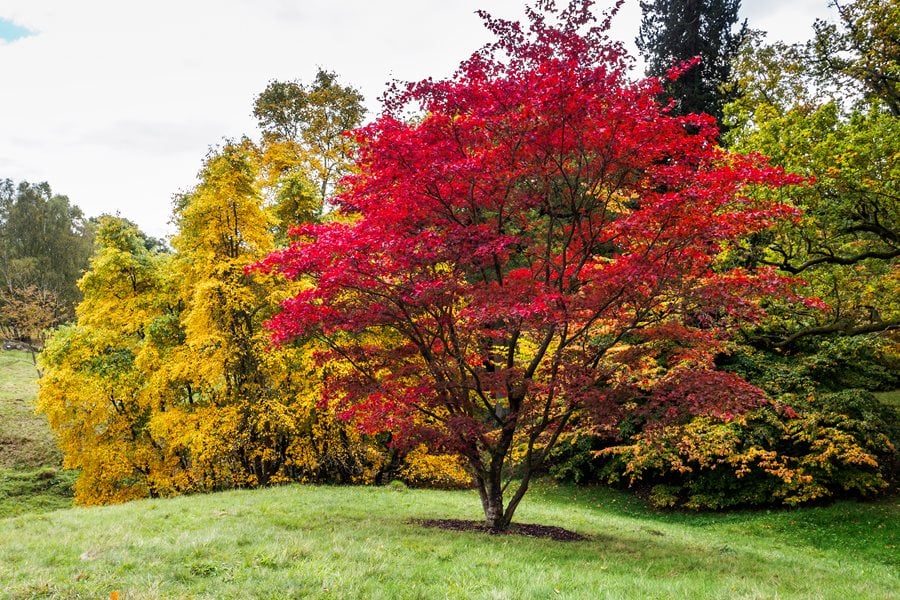
Acer palmatum. Photo by: Philip Bird | Dreamstime.
Zones:
Generally, zones 5-8. Heat is a consideration, especially in the south, not necessarily for the health of the maple but for its effect on leaf color, causing many purple or red-leaved varieties to “go green” in the summer. They typically leaf out early in the season and a late cold snap can cause serious damage even to mature specimens.Height/Spread:
Varieties from 8 to 30 feet tall and wide.Exposure:
Providing the right amount of light can be a balancing act. Too much light can damage delicate leaves. Too little light, and some of the more colorful varieties will take on a greenish tone — still attractive, but not the brilliant fall color of reds and purples as would be expected. For best color, most maples need a location with part day's sun or at least high light.Foliage color:
Famous for their phenomenal fall colors, Japanese maples also present purples, reds, yellows, oranges, and greens as well as variegation throughout the growing season.Growth rate:
Most Japanese maples grow at a slow to moderate rate of 1 to 2 feet per year. They typically grow fastest when they are young and slow down as they reach maturity. Planting them in a spot where they are happy and caring for them well helps maximize their growth rate. If you want an established look right from the start, you can opt to plant an older, larger maple rather than a young one that may take years to mature. If this isn’t an option, select a cultivar that has a reputation for being a faster-than-average grower, such as Acer palmatum ‘Beni-otake’.Types:
Japanese maples offer plenty of diversity. Compare the different types of Japanese maples here.PLANTING JAPANESE MAPLES
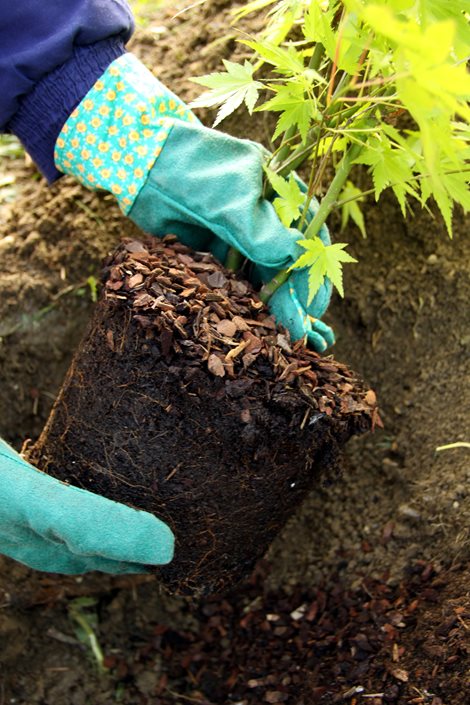
Planting a young Japanese maple tree. Photo by: Darkop | Dreamstime.
When to plant:
Fall is an excellent time to plant because it allows the roots of your Japanese maple to get established while the rest of the tree is dormant. However, many gardeners also find success planting in the spring. Either way, make sure there is no threat of frost which can damage a newly planted tree.Location:
Japanese maples prefer to be in locations protected from strong winds and spring frosts.Soil:
Japanese maples are fairly adaptive, but prefer moist, well-drained, slightly acidic soils that contain organic matter. If you live in an area with heavy clay soil, planting them slightly elevated is beneficial; this will help guard against root rot and disease. Chlorosis (yellowing of leaves due to lack of chlorophyll) may occur in high-pH soils.Container planting:
Many of the smaller varieties are excellent in containers. Japanese maples “self stunt,” meaning their top growth will decrease when their roots are confined. When planting in a container, it is still wise to focus on small to medium varieties or dwarf forms.CARE & PRUNING
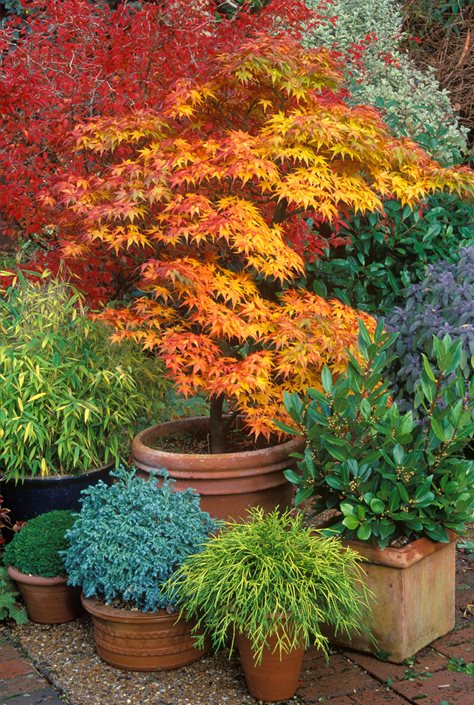
The compact form of this dwarf variety and its unique arrangement of leaves, which are layered like roof shingles, make Acer palmatum ‘Mikawa Yatsubusa’ an excellent choice for growing in a pot and a top pick of bonsai enthusiasts. Zones 5-8. Photo by: Richard Bloom.
Water:
Water them well at planting time and regularly thereafter. Although they can endure periodic dry spells once established, you will want to avoid moisture extremes and water regularly during extreme drought. Maples like mulch to protect their roots from heat and cold, as well as reduce the frequency of watering, especially for those in containers. Keep mulch several inches away from the trunk.Fertilizer:
Low-nitrogen fertilizer is fine in spring (N-15 or lower), but don’t apply after May, as this could impede fall color & winter toughness. It is best to wait to fertilize newly planted Japanese maples until their second growing season.Pruning:
As a rule, Japanese maples don’t require regular pruning and will create their own naturally beautiful shape. However, if you want to create an airy look, thin out branches over time; to create a canopy, remove lower limbs. Japanese maples are an exception to the common pruning times of fall and winter because of the sap that will ooze from the cuts in those seasons; this can lead to disease and a weakened tree. The best time for pruning is July-August when sap won’t ooze from the branches. Because many Japanese maples are grafted, any shoots that grow from the base of the plant should be removed as these can become stronger than the grafted section and overtake it.Problems, Diseases, Pests:
For the most part, Japanese maples don’t suffer from any serious insect or disease problems. They can be susceptible to stem canker, leaf spots, fusarium, verticillium wilt, botrytis, anthracnose, and root rot. Mites can be troublesome, and other pests may include aphids, scale, borers, and root weevils.JAPANESE MAPLE DESIGN IDEAS
Japanese maples can stand alone as a single spectacular centerpiece, focal point, or accent, as well as work together to provide a dramatic backdrop. They play well with others, particularly plants with similar light and water needs. Perennials and ground covers planted around them can add additional color to the area as well as provide an area of protection to the trunk from mower and weed-eater injury.Customer Reviews for Jiffy Plants
F
Is the venus fly trap really in good condition if anyone has bought it.
A
Plant were all had pest holes
R
Plants were healthy and packing was quite good!! Happy with my plants
S
I received all the plants that I ordered in excellent condition. The packaging was perfect and the plants arrived as if I brought them from a nursery personally.
P
Excellent
S
All the plants i recieved were in a very good condition and a recieved them wothin 2 days and the price was also good
C
Received the plants in very good condition, thank you so much.
N
Excellent service and products.
T
This plant came in good condition
S
Had ordered ten plants in coco peat seeding capsules. It was delivered well packed and all the plants were healthy. Foliage.in platform friends were quick and very helpful with my queries. Appreciate the quality of plants and HR
J
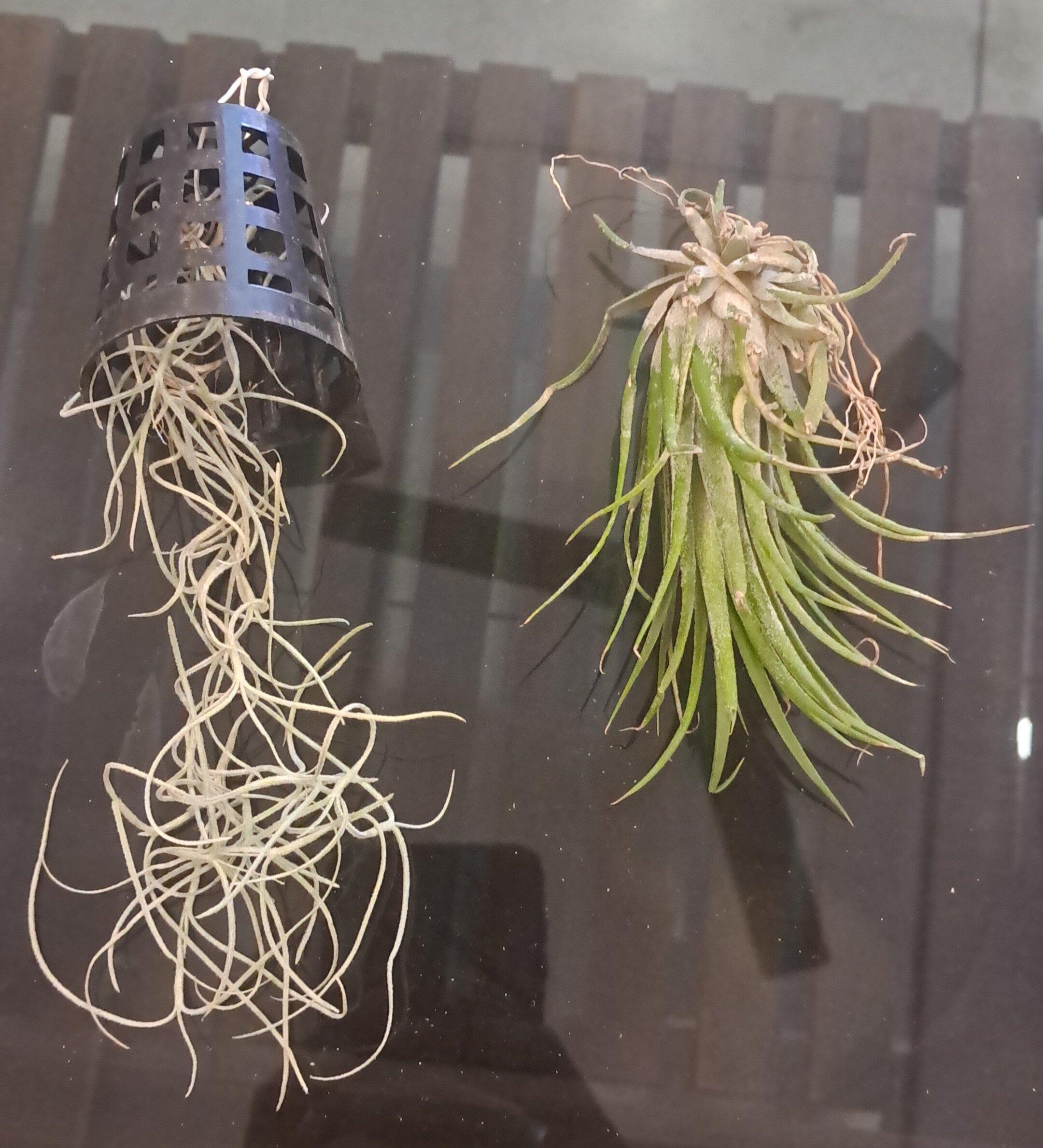
I bought Spanish moss and Tillandsia from Jiffy Plants and both came in good condition with good packing.
R
Plants are very healthy. Good packing too.
T
Excellent service and good product. Plant arrived healthy, well-packaged, and already budding. Very happy with my purchase