

Cart
0


*Images are for reference only
×



Share this product
4.4
★
★
★
★
☆
Based on 13 reviews
We deliver within 7–10 working days.
Vendor: Jiffy Plants
Couldn't load pickup availability
100% Live & Healthy Plant
Secure payment
Healthy Roots Guarantee 🌱
Guarantee safe checkout


Kalanchoe Purple
Rs. 275.00

Selling Size : Single Plant | Pot Included | Secure Packing
Caring for a 'Kalanchoe Purple' is essentially the same as caring for any other color variety of Kalanchoe blossfeldiana (often called Flaming Katy). These are hardy, easy-to-care-for succulents that thrive on a bit of neglect.
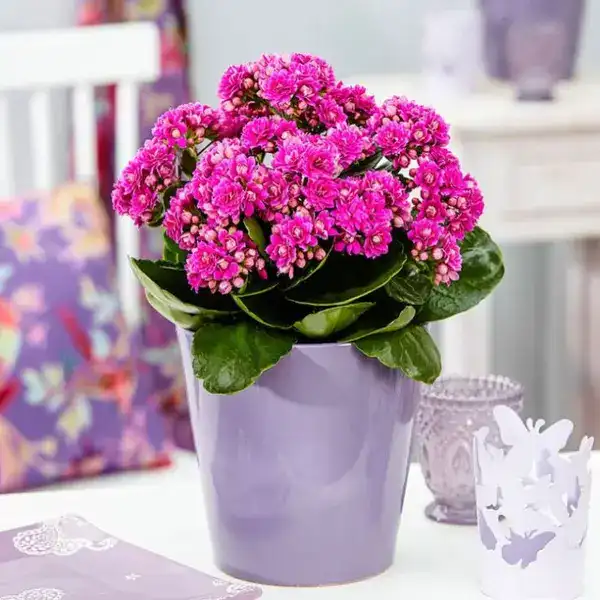 Kalanchoe Purple
 Here is a comprehensive guide to caring for your Kalanchoe Purple :
1. Light Requirements
- Bright, Indirect Light is Best: Place your plant near a sunny window (south or west-facing is ideal in the Northern Hemisphere). Bright light is crucial for maintaining a compact shape and encouraging plentiful blooms.
- Avoid Harsh Sun: While they are sun-loving, prolonged exposure to intense, direct afternoon sunlight can scorch the leaves. Filtered light or morning sun is safer.
- Low Light Sign: If the stems start to look "leggy" (long and stretched out) and the leaves are sparse, your plant needs more light.
2. Watering
- A Succulent Rule: Kalanchoe is a succulent and its leaves store water, making it extremely susceptible to root rot from overwatering.
- Allow Soil to Dry: Water only when the top 1 to 2 inches of soil is completely dry. In average home conditions, this often means watering every 1–3 weeks, depending on light and temperature.
- Watering Method: Water thoroughly until you see water drain out of the pot's bottom holes.
- No Standing Water: Immediately empty the saucer after watering. The plant should never sit in water.
- Winter: Reduce watering significantly in the fall and winter when the plant is dormant.
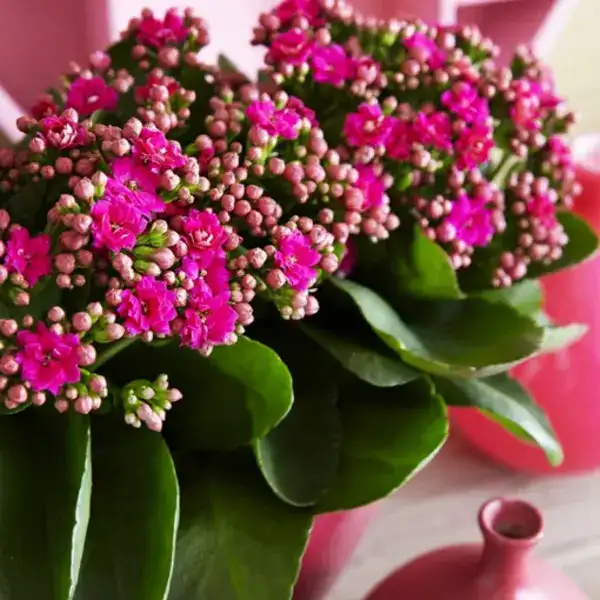 Kalanchoe Purple
 3. Soil and Potting
- Soil: Use a well-draining potting mix. A specialized cactus or succulent mix is perfect. You can also mix standard potting soil with perlite or coarse sand (a 50/50 ratio is often recommended) to ensure excellent drainage.
- Pot: Use a container with drainage holes to allow excess water to escape.
4. Temperature and Humidity
- Temperature: Kalanchoes prefer average indoor temperatures, ideally between 60°F and 85°F (15∘C and 29∘C).
- Avoid Cold: They are not cold-hardy and should be kept away from cold drafts, uninsulated windows in winter, and temperatures below 50∘F (10∘C).
- Humidity: Average indoor humidity is fine. Do not mist the leaves, as high humidity combined with water on the leaves can lead to fungal problems.
5. Fertilizing
- When to Feed: Fertilize during the active growing season (spring and summer).
- Fertilizer Type: Use a balanced, water-soluble fertilizer diluted to half the recommended strength, once a month.
- To Encourage Blooms: A fertilizer with a higher phosphorus content (the middle number in the NPK ratio) can help promote more flowers.
- Dormancy: Stop fertilizing in the fall and winter.
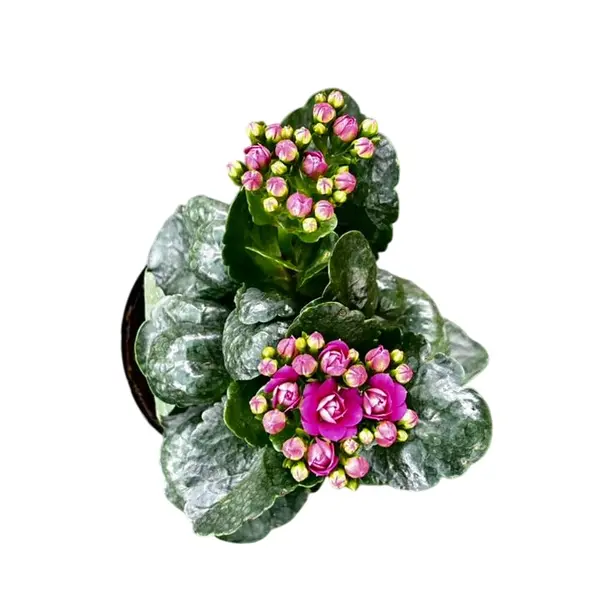 Kalanchoe Purple
 6. Pruning and Reblooming Kalanchoe Purple
- Deadheading: Once the purple flowers fade, trim the spent flower stalks back to the main foliage. This keeps the plant looking tidy and encourages it to focus energy on new growth.
- Pruning for Shape: You can pinch back leggy or overgrown stems in the spring to encourage a bushier, more compact plant.
-
Reblooming (Short-Day Plant): To trigger new flower buds, the Kalanchoe needs a period of "short days." For about six weeks, provide the plant with:
- 14 hours of complete, uninterrupted darkness every night (e.g., placing it in a closet or under a light-proof box from 6 PM to 8 AM).
- 8-10 hours of bright light during the day.
- Reduced watering and no fertilizer during this six-week period.
- After the six weeks, return the plant to its normal bright light and regular watering/feeding schedule. You should see new buds develop in a few months.
Customer Reviews for Jiffy Plants
F
Is the venus fly trap really in good condition if anyone has bought it.
A
Plant were all had pest holes
R
Plants were healthy and packing was quite good!! Happy with my plants
S
I received all the plants that I ordered in excellent condition. The packaging was perfect and the plants arrived as if I brought them from a nursery personally.
P
Excellent
S
All the plants i recieved were in a very good condition and a recieved them wothin 2 days and the price was also good
C
Received the plants in very good condition, thank you so much.
N
Excellent service and products.
T
This plant came in good condition
S
Had ordered ten plants in coco peat seeding capsules. It was delivered well packed and all the plants were healthy. Foliage.in platform friends were quick and very helpful with my queries. Appreciate the quality of plants and HR
J
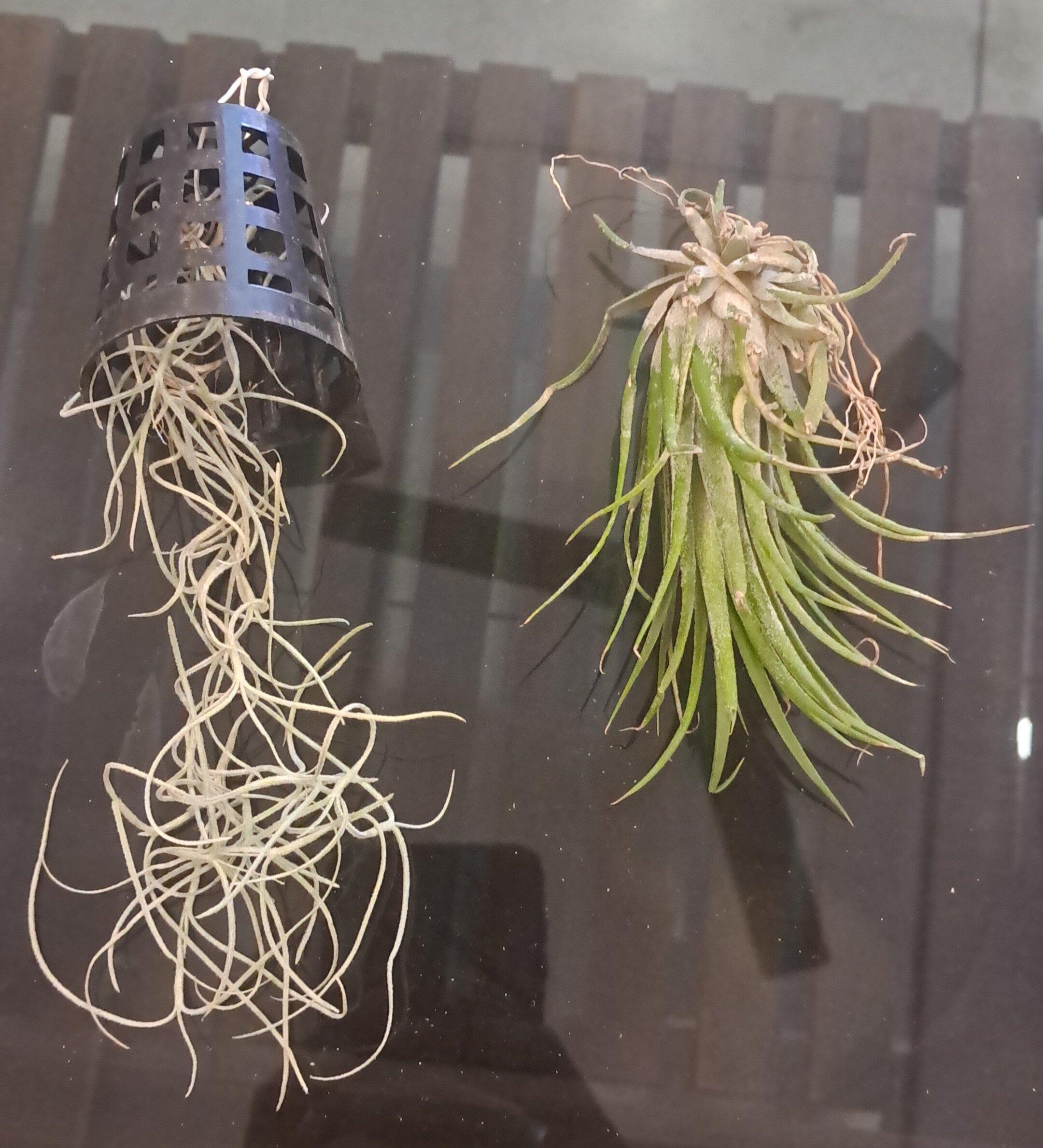
I bought Spanish moss and Tillandsia from Jiffy Plants and both came in good condition with good packing.
R
Plants are very healthy. Good packing too.
T
Excellent service and good product. Plant arrived healthy, well-packaged, and already budding. Very happy with my purchase