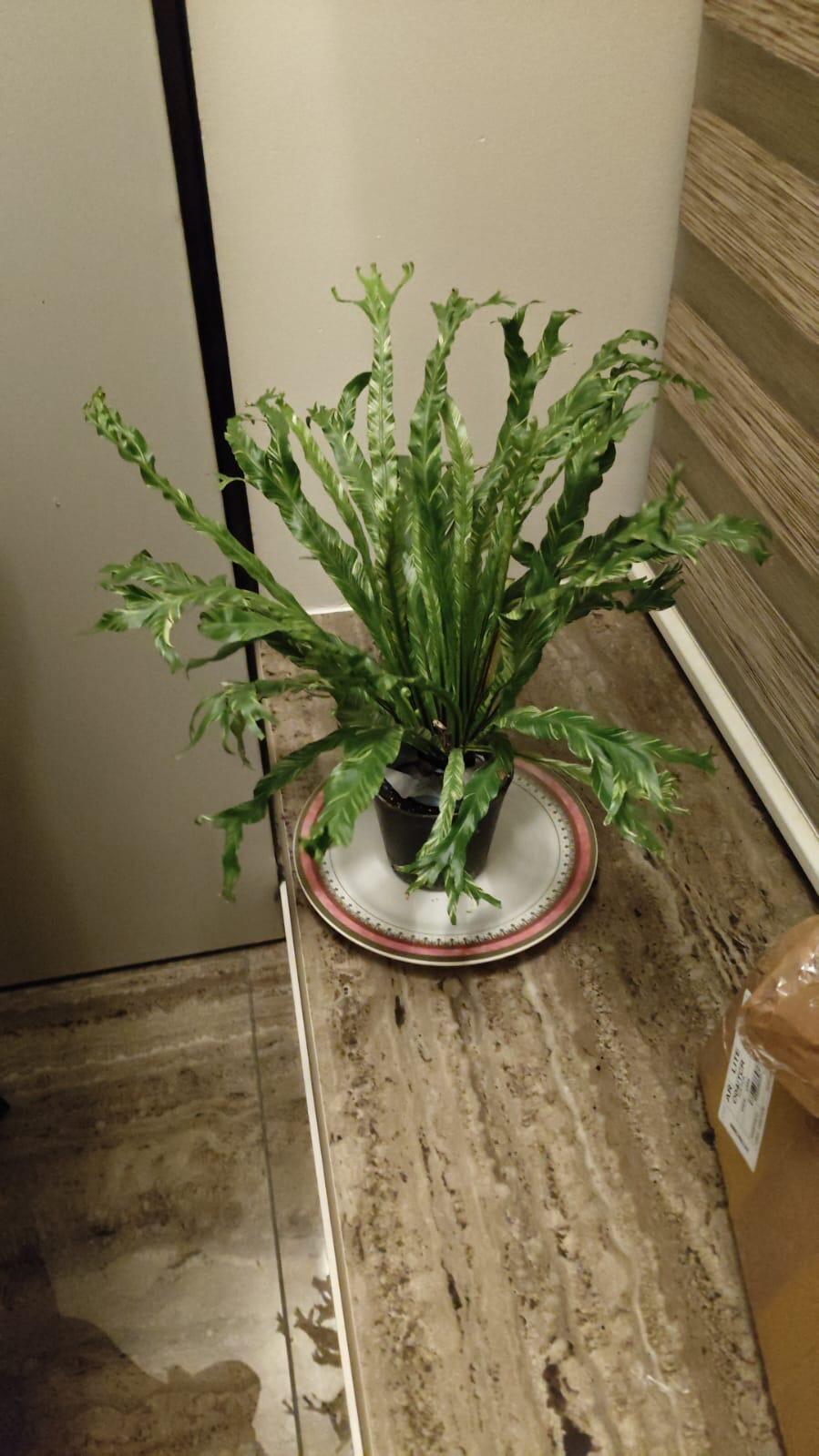
The Monstera dubia is a truly captivating tropical aroid, highly prized for its distinctive shingling growth habit and unique foliage. In its juvenile form, this plant features small, heart-shaped leaves that lie flat against a surface, displaying an enchanting silvery-green variegation with darker green veins. Native to the humid rainforests of Central and South America, this rare vine brings a touch of exotic elegance and intriguing visual appeal to any indoor plant collection, making it a favorite among enthusiasts.
🌟 Overview
-
Foliage: Unique silvery-green, heart-shaped juvenile leaves that 'shingle' or flatten against surfaces. Mature leaves (rarely seen indoors without ideal conditions) develop fenestrations.
-
Growth Habit: A vining plant that readily climbs, displaying its characteristic shingling behavior when given a suitable support.
-
Rarity: Considered a rare and sought-after collector's plant.
-
Air Purifying: Helps to clean indoor air, contributing to a healthier environment.
☀️ Light Requirements
-
Ideal: Bright, indirect light. A spot near an east or west-facing window is often perfect.
-
Avoid: Direct sunlight, especially harsh afternoon sun, which can scorch its delicate leaves.
-
Tolerance: Can tolerate slightly lower light conditions, but growth may be slower and less vibrant.
💧 Water Requirements
-
Frequency: Water thoroughly when the top 1-2 inches of soil feel dry to the touch.
-
Drainage: Ensure excellent drainage to prevent root rot; never let the plant sit in standing water.
-
Humidity: Prefers high humidity (60-80%). Consider using a humidifier, misting regularly, or placing it on a pebble tray.
📏 Size & Growth
-
Height: As a climbing vine, it can grow several feet long with appropriate support.
-
Leaf Size: Juvenile leaves typically range from 2-4 inches. With maturity and strong support, leaves can eventually reach 8-12 inches and develop splits/holes (fenestrations).
-
Support: Requires a moss pole, wooden plank, or textured wall for its characteristic shingling and to encourage maturation.
🌍 Origin & Characteristics
-
Native Habitat: Indigenous to the tropical rainforests of Central and South America, where it grows as an epiphytic hemi-epiphyte, climbing trees.
-
Distinctive Feature: Its most notable characteristic is the 'shingling' behavior of its juvenile leaves, which tightly adhere to surfaces.
-
Evolution: The silvery variegation is believed to help camouflage the young plant from herbivores on the forest floor.
📇 Toxicity & Safety Warning
- Like most plants in the Araceae family, Monstera dubia contains calcium oxalate crystals.
- Ingestion can cause irritation to the mouth, throat, and digestive tract, leading to symptoms like swelling, burning, and stomach upset.
- Keep this plant out of reach of pets and small children. Not intended for consumption.
❓ Frequently Asked Questions
Q: How do I get my Monstera dubia to 'shingle'?
A: To encourage shingling, provide a flat, sturdy surface like a moss pole, a cork bark slab, or a wooden plank for the plant to climb. Its aerial roots will readily attach, promoting its characteristic growth habit.
Q: Why are my Monstera dubia's leaves not developing fenestrations?
A: Fenestrations typically appear on mature leaves, which usually happens when the plant has climbed significantly and receives optimal conditions. Ensure your plant has ample bright indirect light, consistently high humidity, regular watering, and a sturdy support to encourage this mature growth.
Q: What's the best way to propagate Monstera dubia?
A: Stem cuttings with at least one node and ideally an aerial root are most successful. You can propagate them in water, moist sphagnum moss, or directly in a well-draining potting mix. Ensure high humidity for best results.