

Cart
0


*Images are for reference only
×



Share this product
4.9
★
★
★
★
☆
Based on 8 reviews
We deliver within 7–10 working days.
Vendor: Jiffy Plants
Couldn't load pickup availability
100% Live & Healthy Plant
Secure payment
Healthy Roots Guarantee 🌱
Guarantee safe checkout


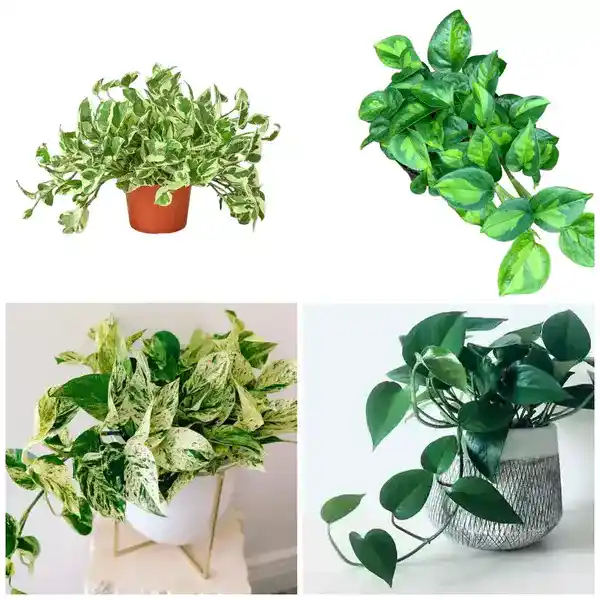
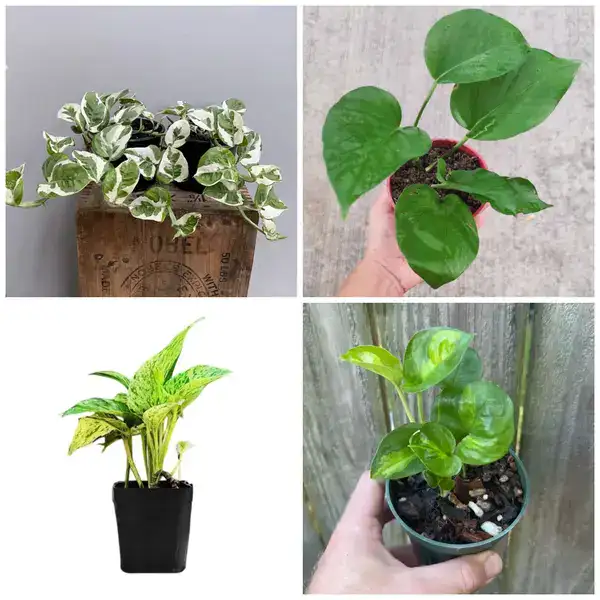
pothos 4 Plants Combo
Rs. 499.00

Selling Size : Single Plant | Pot Included | Secure Packing
Pothos, also known as Devil's Ivy, is one of the most popular and easiest houseplants to grow, making it perfect for beginners. Its long, trailing vines with heart-shaped leaves can add a lush, green touch to any space.
pothos 4 Plants Combo includes-
Epipremnum Aureum ‘Njoy Pothos’
-
Marble Queen Pothos – Money Plant
-
Epipremnum Aureum ‘Global Green’ Pothos – Rare
-
Epipremnum Aureum Jade / Jade pothos
 pothos 4 Plants Combo
 Here is a comprehensive guide to caring for your Pothos plant:
Light
- Bright, indirect light is best. Pothos can adapt to a wide range of light conditions, from low light to bright, indirect light.
- Avoid direct sun. Direct sunlight can scorch the leaves and cause them to turn yellow or brown.
- Low light tolerance. While it can survive in low light, its growth will be slower, and variegated varieties may lose their distinct patterns and revert to solid green.
Water
- Water when the top 1-2 inches of soil are dry. Pothos is very forgiving of watering mistakes, but it's crucial to let the soil dry out a bit between waterings.
- The plant will tell you. A good sign that your Pothos needs a drink is when its leaves start to droop slightly.
- Avoid overwatering. This is the most common cause of problems for Pothos. Overwatering can lead to root rot, which will cause yellow leaves and a mushy stem. Ensure your pot has drainage holes to allow excess water to escape.
Soil and Potting
- Well-draining, nutrient-rich soil. A standard indoor potting mix is generally fine. You can improve drainage by adding perlite or pumice to the mix.
- Repotting. Pothos plants are happiest when they are a little bit root-bound. You typically only need to repot them every 1-2 years, or when you see roots growing out of the drainage holes.
- Choose the right size pot. When repotting, select a new container that is only one or two inches larger in diameter than the old one.
Temperature and Humidity
- Average room temperatures. Pothos plants are comfortable in the same temperature range as humans, typically between 65-85°F (18−29∘C).
- Avoid cold drafts. Keep them away from cold windows or air conditioning vents, as cold air can damage the foliage.
- Humidity. Pothos are native to tropical climates and appreciate higher humidity, but they tolerate average indoor humidity well. You can increase humidity by misting the leaves, using a pebble tray, or placing it in a humid room like a bathroom.
Fertilizing
- Feed during the growing season. Pothos plants are not heavy feeders. You can fertilize them once a month in the spring and summer using a balanced, liquid houseplant fertilizer.
- Dilute the fertilizer. It's a good idea to dilute the fertilizer to half the recommended strength to avoid over-fertilizing and causing salt buildup in the soil.
- Stop in fall and winter. Reduce or stop fertilizing during the cooler months when the plant's growth naturally slows down.
Pruning and Propagation
- Pruning. To encourage a fuller, bushier plant, regularly prune the long, trailing vines. You can simply cut the stems back to your desired length.
- Propagation is easy. Pothos can be effortlessly propagated in water. Simply take a stem cutting that has at least one or two leaves and a node (the small bump where a leaf meets the stem). Place the cutting in a jar of water, and roots will begin to grow in a few weeks. Once the roots are a couple of inches long, you can plant it in soil.
 pothos 4 Plants Combo
 Common Problems
- Yellowing leaves: This is often a sign of overwatering. Let the soil dry out before watering again.
- Brown, crispy tips: This can be caused by low humidity or too much direct sunlight.
- Wilting leaves: This typically means the plant is thirsty. Give it a good drink, and it should perk back up quickly.
- Leggy vines with few leaves: This is a sign that the plant is not getting enough light. Move it to a brighter location.
Customer Reviews for Jiffy Plants
S
I received all the plants that I ordered in excellent condition. The packaging was perfect and the plants arrived as if I brought them from a nursery personally.
S
All the plants i recieved were in a very good condition and a recieved them wothin 2 days and the price was also good
C
Received the plants in very good condition, thank you so much.
N
Excellent service and products.
S
Had ordered ten plants in coco peat seeding capsules. It was delivered well packed and all the plants were healthy. Foliage.in platform friends were quick and very helpful with my queries. Appreciate the quality of plants and HR
J
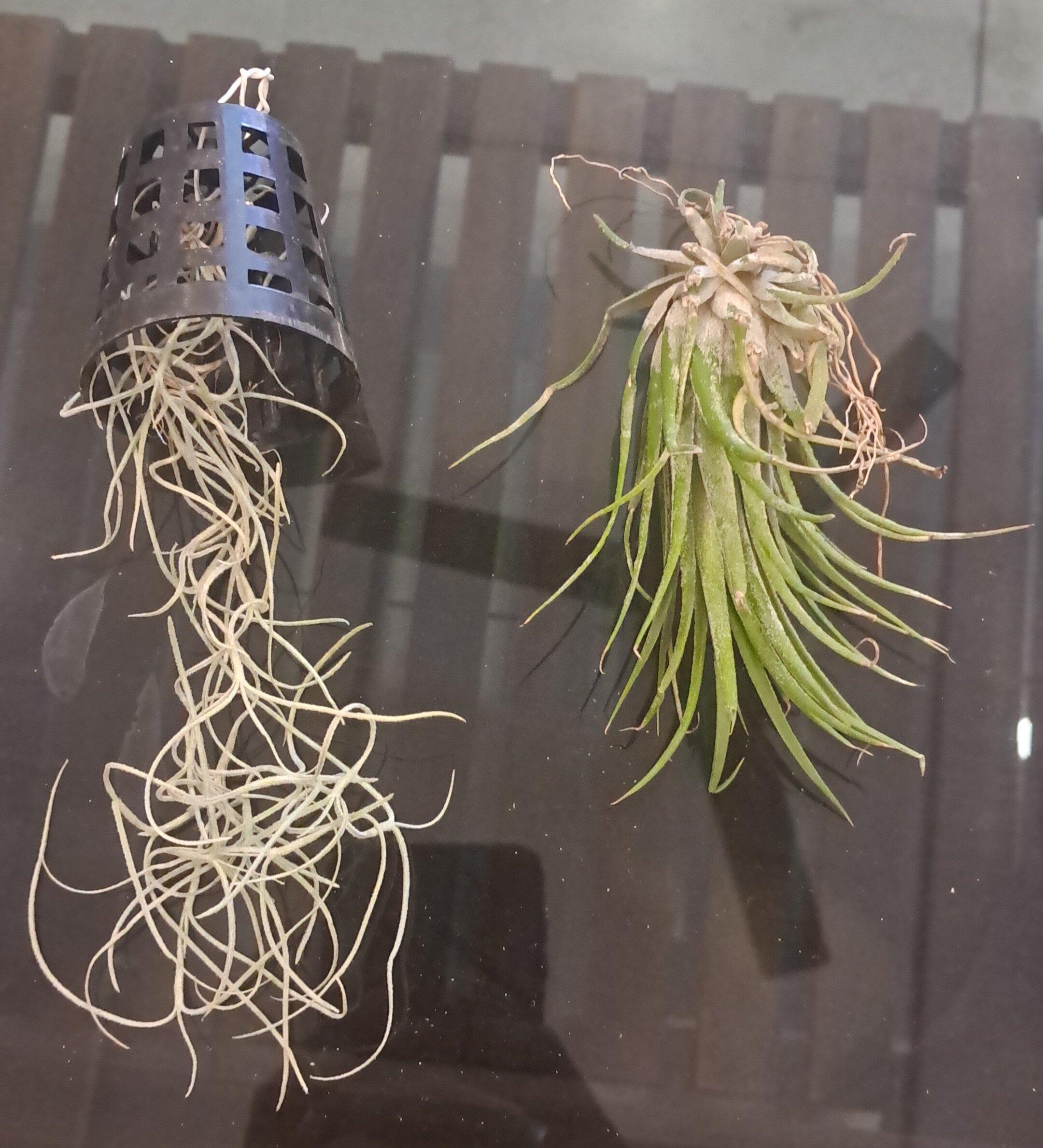
I bought Spanish moss and Tillandsia from Jiffy Plants and both came in good condition with good packing.
R
Plants are very healthy. Good packing too.
T
Excellent service and good product. Plant arrived healthy, well-packaged, and already budding. Very happy with my purchase


