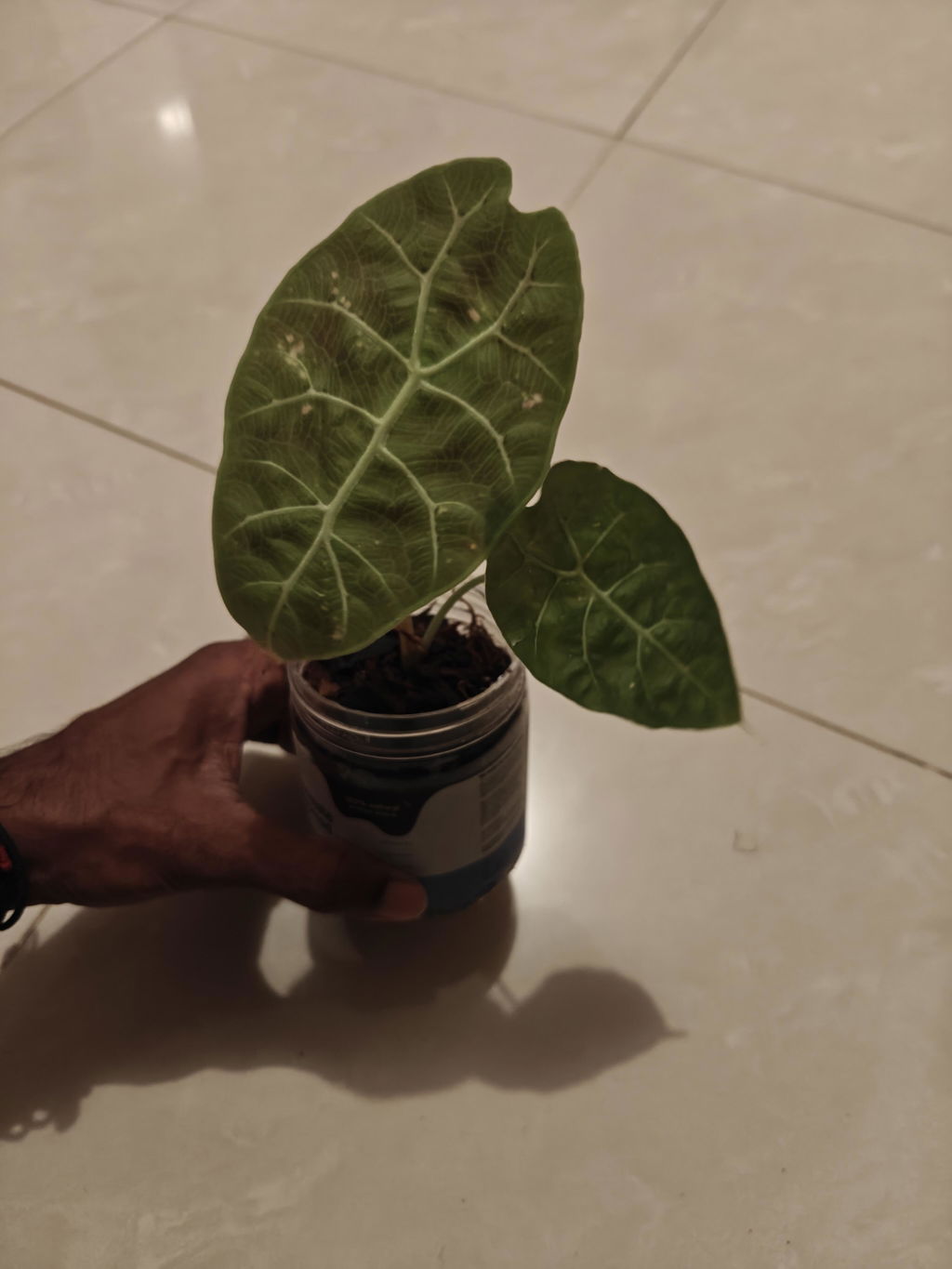
Caladiums, often called 'Heart of Jesus' or 'Angel Wings', are celebrated for their stunning, paper-thin leaves adorned with a mesmerizing palette of colors, veins, and patterns. Hailing from the tropical rainforests of South America, these vibrant beauties bring an instant splash of exotic allure and elegance to any indoor space, captivating plant enthusiasts with their seasonal display of dramatic foliage.
🌟 Overview
The Caladium 'Rosebud' is a captivating variety renowned for its exquisite foliage, featuring delicate pink centers that blush outwards into deeper rose tones, framed by contrasting green margins. This tuberous plant offers a spectacular display of heart-shaped leaves, perfect for adding a touch of vibrant tropical charm to your home. It typically enters a dormancy phase in cooler months.
☀️ Light Requirements
- Prefers bright, indirect light to maintain its vibrant leaf coloration.
- Avoid direct sunlight, which can scorch the delicate leaves and fade their colors.
- Partial shade conditions are ideal, mimicking its natural understory habitat.
💧 Water Requirements
- Keep the soil consistently moist but never waterlogged during its growing season.
- Allow the top 1-2 inches of soil to dry out between waterings.
- Reduce watering significantly during the dormant period (late autumn to early spring) to prevent tuber rot.
📏 Size & Growth
When mature, 'Rosebud' Caladiums typically reach a height of 15-30 cm in indoor pots. Known for their bushy growth habit, they will produce a lush display of foliage before entering their natural dormancy. Our Jiffy-sized plants are young specimens ready to thrive.
🌍 Origin & Characteristics
Native to the humid, shaded understories of South American rainforests, Caladiums are famous for their unique, often translucent, heart-shaped or lance-shaped leaves. 'Rosebud' is a cultivar prized for its distinct pink, red, and green variegation, making each leaf a living work of art. As a tropical plant, it thrives in warm, humid conditions.
📇 Toxicity & Safety Warning
Caladiums are considered toxic if ingested due to the presence of calcium oxalate crystals, which can cause irritation to the mouth, throat, and digestive system. Keep this plant out of reach of pets and small children.
❓ Frequently Asked Questions
Q: Why are my Caladium leaves turning yellow?
A: Yellowing leaves can indicate overwatering, underwatering, or too much direct sunlight. It can also be a natural sign that the plant is entering its dormant phase.
Q: How do I know when my Caladium is going dormant?
A: Your Caladium will signal dormancy by having its leaves gradually yellow and die back. This typically occurs in late autumn or winter as temperatures drop and light diminishes.
Q: Can I grow Caladiums outdoors?
A: Yes, in tropical or subtropical climates (USDA zones 9-11), Caladiums can be grown outdoors in shaded garden beds or containers, provided they are protected from direct sun and frost.