

Cart
0


*Images are for reference only
×



Share this product
4.9
★
★
★
★
☆
Based on 8 reviews
We deliver within 7–10 working days.
Vendor: Jiffy Plants
Couldn't load pickup availability
100% Live & Healthy Plant
Secure payment
Healthy Roots Guarantee 🌱
Guarantee safe checkout


Tillandsia Stricta (Air plant)
Rs. 299.00

Selling size: Single plant | Secure Packing
The Tillandsia Stricta (Air plant) is one of the most popular and adaptable species of air plants, known for its soft, green-silver foliage and beautiful blooms. Like all air plants, it is epiphytic, meaning it absorbs all its water and nutrients through its leaves from the air, not from soil.Here is a comprehensive care guide for your Tillandsia Stricta (Air plant):
 Tillandsia Stricta (Air plant)
 Tillandsia Stricta (Air Plant) Care Guide
1. Light
| Aspect | Details |
| Ideal | Bright, Indirect Light. This is crucial for their health and growth. An east-facing window is great, or a spot near a south or west window that is filtered by a sheer curtain. |
| Artificial Light | They do very well under full-spectrum fluorescent or LED grow lights for about 12 hours a day. |
| Warning | Avoid intense, direct sun, especially hot afternoon sun, which can quickly dry out and burn the foliage. |
2. Watering (The Soak Method)
The primary method for watering is soaking, as misting is often insufficient for proper hydration.| Aspect | Details |
| Frequency | Once per week. In very hot or dry climates, you may increase this to twice a week or supplement with misting. |
| Soaking Time | Submerge the entire plant (except for a bloom spike, if present) in a bowl of room-temperature water for 20 to 30 minutes. |
| Drying | This is the most critical step. After soaking, gently shake off the excess water. Place the plant upside down on a towel in a bright, well-ventilated area. |
| Drying Time | The plant must be completely dry within 1 to 3 hours. If water is trapped in the base, it will lead to fatal rot. You can use a fan to increase air circulation and speed up drying. |
| Water Type | Rainwater, filtered water, or tap water that has sat out for 24 hours (to let chlorine dissipate) is best. Avoid distilled water, as it lacks essential nutrients. |
| Signs of Thirst | Leaves will become more curled or concave. The tips may turn dry or brown. |
 Tillandsia Stricta (Air plant)
 3. Air Circulation
| Aspect | Details |
| Requirement | Air plants need excellent air movement to dry quickly and mimic their natural habitat. |
| Placement | Never place an air plant in a completely closed container or terrarium (e.g., a globe with no opening). If using a terrarium, ensure it is open and large enough for good air flow. |
| After Watering | Ensure the area has good ventilation to facilitate the 1–3 hour drying time. |
4. Temperature & Humidity
| Aspect | Details |
| Temperature | Prefers warm conditions, ideally between 50∘F and 90∘F (10∘C to 32∘C). They are not frost-tolerant and should be kept indoors during cold weather. |
| Humidity | Tillandsia stricta is a "mesic" (medium water-requiring) species that enjoys high humidity. If your home air is dry, supplemental misting a few times a week can be beneficial between soaks. |
5. Fertilizing
| Aspect | Details |
| Method | Fertilizing is not required but will encourage faster growth, blooming, and "pupping" (producing offsets). |
| Fertilizer | Use a specialized Tillandsia or Bromeliad fertilizer diluted to 1/4 or 1/2 strength. |
| Frequency | Apply once a month during the spring and summer growing season, either by adding it to the soaking water or misting it on. |
 Tillandsia Stricta (Air plant)
 6. Display and Life Cycle
| Aspect | Details |
| Mounting | You can display it on driftwood, shells, rocks, or ceramic pieces. Use a waterproof adhesive (like E-6000) or wire to attach it. Never plant it in soil. |
| Life Cycle | Air plants bloom only once in their lifetime. After blooming, the "mother" plant will begin to produce "pups" (small baby plants) around its base. |
| Pups | You can leave the pups attached to form a clump, or gently separate them when they are at least 1/3 to 1/2 the size of the mother plant. |
| Grooming | It is normal for some of the lowest leaves to dry out and brown as the plant grows. You can gently pull these off or trim brown leaf tips with sharp scissors. |
Customer Reviews for Jiffy Plants
S
I received all the plants that I ordered in excellent condition. The packaging was perfect and the plants arrived as if I brought them from a nursery personally.
S
All the plants i recieved were in a very good condition and a recieved them wothin 2 days and the price was also good
C
Received the plants in very good condition, thank you so much.
N
Excellent service and products.
S
Had ordered ten plants in coco peat seeding capsules. It was delivered well packed and all the plants were healthy. Foliage.in platform friends were quick and very helpful with my queries. Appreciate the quality of plants and HR
J
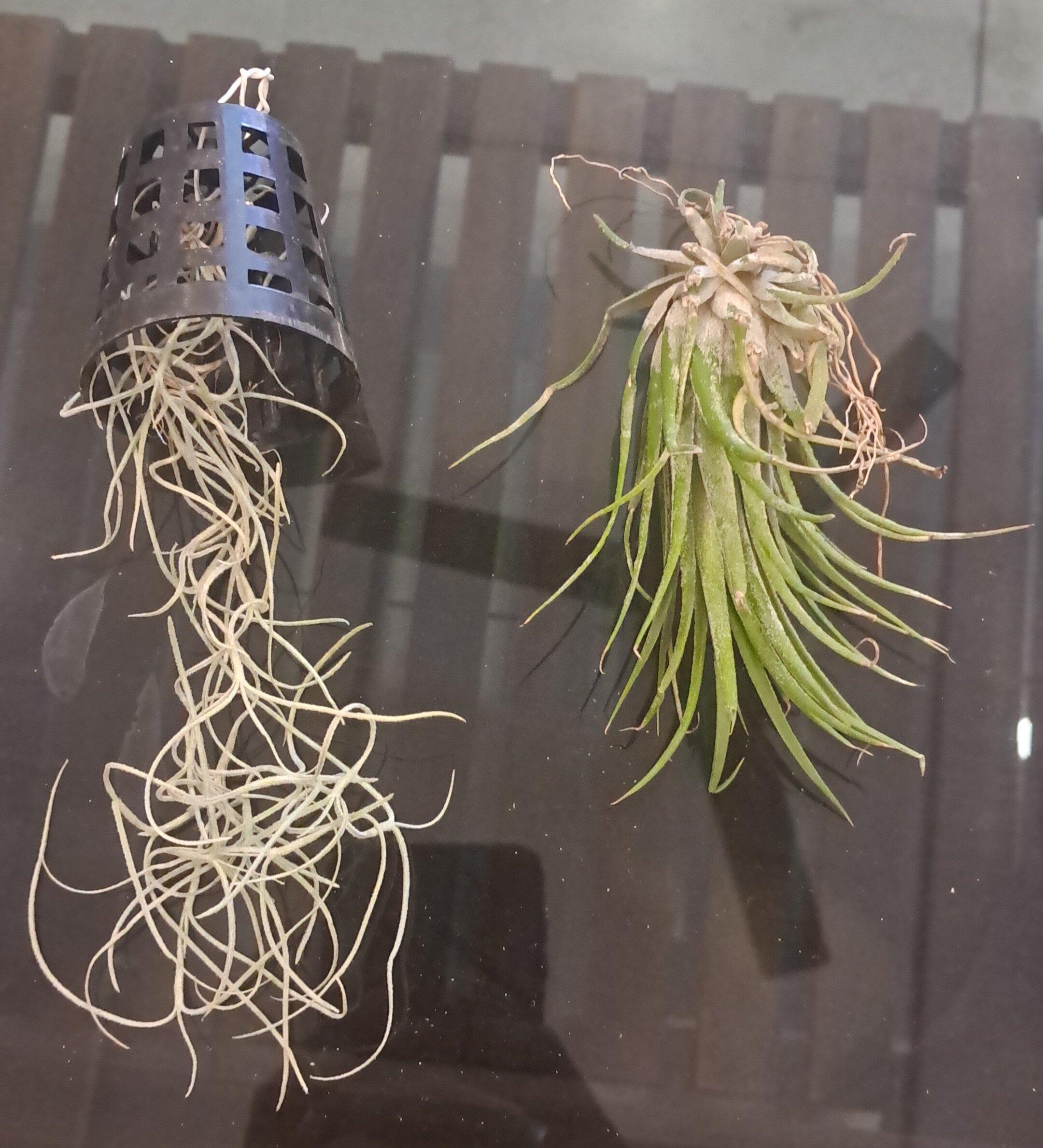
I bought Spanish moss and Tillandsia from Jiffy Plants and both came in good condition with good packing.
R
Plants are very healthy. Good packing too.
T
Excellent service and good product. Plant arrived healthy, well-packaged, and already budding. Very happy with my purchase


